Independent AI advisor to CEOs and boards.
An independent view on your AI decisions, before the budget is committed.
By the time an AI proposal reaches the board, it has usually been framed by a vendor, an internal sponsor or the hype around AI. I work with CEOs and boards earlier in the process. Together we establish what the project must prove, what it will really cost and under what conditions it should be stopped.
- Former Head of Data Science, Carrefour Romania. Earlier roles at IBM and Endava.
- More than 25 years in IT and data, including 10 in applied AI across retail, banking, manufacturing and energy.
- No software, licences or implementation to sell. No vendor partnerships.
- Fixed scope, fixed fee and an agreed end date for every engagement.
- Based in Bucharest. Working in English and Romanian, on site or remotely across Europe.
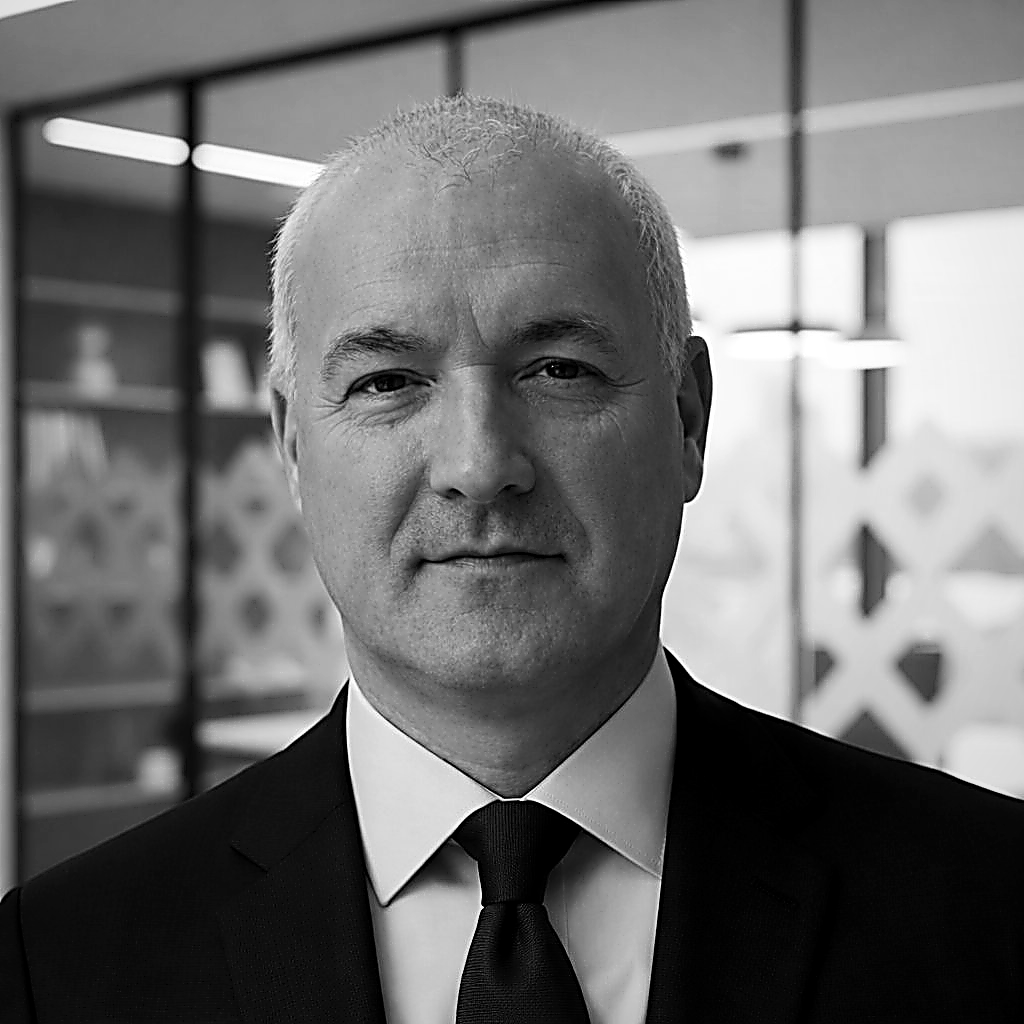
Ștefan Pănăzan, Founder, AI RADAR
Most AI failures I’ve seen didn’t start with bad execution. They started with a bad decision.
Before anything gets built, someone has to be clear about what problem is worth solving, who owns the outcome, what success actually looks like, and when to stop. Sometimes those answers are weak. Sometimes they are simply never there. The technical team can still do excellent work, build something impressive, and burn through the budget. Technology can deliver the project, but it cannot give the project a reason to exist. Eighteen months later, the harvest is disappointment, confusion, finger-pointing, and opportunities you will never get back.
Once the technology works, the failures that remain are mostly management failures. Nobody owns the result, nobody agreed beforehand what would count as proof, the incentives point the wrong way, or nobody is willing to be the one who says stop.
That’s the part I work on. Not the execution. The judgment that comes before it.
What you get out of it
- A realistic figure for what the AI bet will cost you, in money, in time and in the attention of the people who will have to run it, before you sign anything.
- The vendor’s promises and numbers checked against your own data and your own volumes, while there is still room to say no.
- The risks named early, when fixing them is still cheap: legal exposure, dependence on a supplier, reputation, and the claims in the pitch that do not survive a second look.
- A single page that closes the discussion, with what you scale, what you change, what you run as a limited pilot and what you stop, a name against each item and a date to look at it again.
What you actually receive
The deliverable is one page. It has the same ten headings every time: the decision, the verdict, the reasons, the strongest case against it, what evidence is still missing, when to stop, when to scale, who owns it, when we look at it again, and what to do this week. There is a sample on the Verdict page, written on an invented company. See the sample.
When it is worth calling
- The group has asked for an AI plan by a date, and whatever you send has to hold up in front of people who have read many such plans.
- A pilot has been running for months, the team calls it a success, finance calls it a cost, and nobody can say what it actually proved.
- A vendor wants more money or a longer contract, and there is nobody inside the company who can check the claim.
- Your CTO says the data is ready and your operations director says it is not.
- Someone on the board asked, in plain words, what the AI spend has returned so far.
- You are looking at buying a company that says it has proprietary AI.
Independent by design
What I sell is a better decision; the experience is only how I get there. I do not sell platforms, licences or implementation teams and I do not subcontract for consulting firms, so nothing in my answer earns me anything afterwards.
I will recommend stopping a project as readily as scaling it, and I have done both. Every engagement has an end date, agreed before we start, and I keep to it.
Who this is for
- CEOs and boards of companies with roughly 5 to 50 million euros in revenue that are already spending on AI.
- Country managers of foreign-owned subsidiaries who have to report an AI plan to the group.
- Investment committees at private equity funds, venture funds and family offices.
- Executive teams with a pilot running and no agreement on what it proved.
Who this is not for
- Companies looking for someone to build the system.
- Buyers looking for the cheapest AI strategy document.
- Anyone who has already decided and wants the decision blessed.
Six ways in. Pick the one that sounds like your situation.
“I have an AI decision to make this quarter.”
AI Verdict. One decision, one working session with your executive team, and a one-page memo five working days later: what to scale, what to change, what to run as a limited pilot and what to stop, plus what still has to be proven. The first three clients pay a founding-client fee.
“My executive team doesn’t agree about AI and I can’t see where.”
AI Maturity Diagnostic, run as a cohort. Each executive answers separately and privately. I read the results and we spend ninety minutes on the disagreements that actually change a decision. The questionnaire is only the instrument; the debrief is what you pay for.
“My board needs a shared way of deciding about AI.”
Board AI Decision Lab. Four hours with the board or the leadership team on one real decision from your agenda. You leave with the decision, with the criteria you will apply to the next ones and with named owners for the next thirty days. It is not a training course.
“I’m evaluating a company that claims to have AI.”
AI Due Diligence. The AI part of your diligence, done in three to five days before the letter of intent: whether the AI is real, what it costs to keep running and what you are actually buying.
“These decisions keep coming, every quarter.”
Fractional Chief AI Officer. A first mandate of ninety days, a few days a month, to put in place a way of deciding, governing and reviewing AI. At the end of it we decide together whether you still need me. I only take this on after a first piece of work together.
“We need the conversation before any of this.”
Călătoria AI, one scene, one conversation. I send your team the one scene from the book that is closest to the decision you are facing, and we spend ninety minutes on it. You get a page on what it means for you. There is no fee, I do it once per company, and the book itself is with publishers.
Most costly AI projects rest on assumptions that were never checked against evidence. That is how budgets grow beyond the value they deliver. I test those assumptions with the CEO and the board before the budget is committed, and I ask for the evidence nobody has asked for yet.
Book a 30-minute call to discuss an AI decision you are facing. It is free of charge, and you decide how much detail to share. If confidentiality matters, a general description is enough, and I can sign an NDA before we go further.